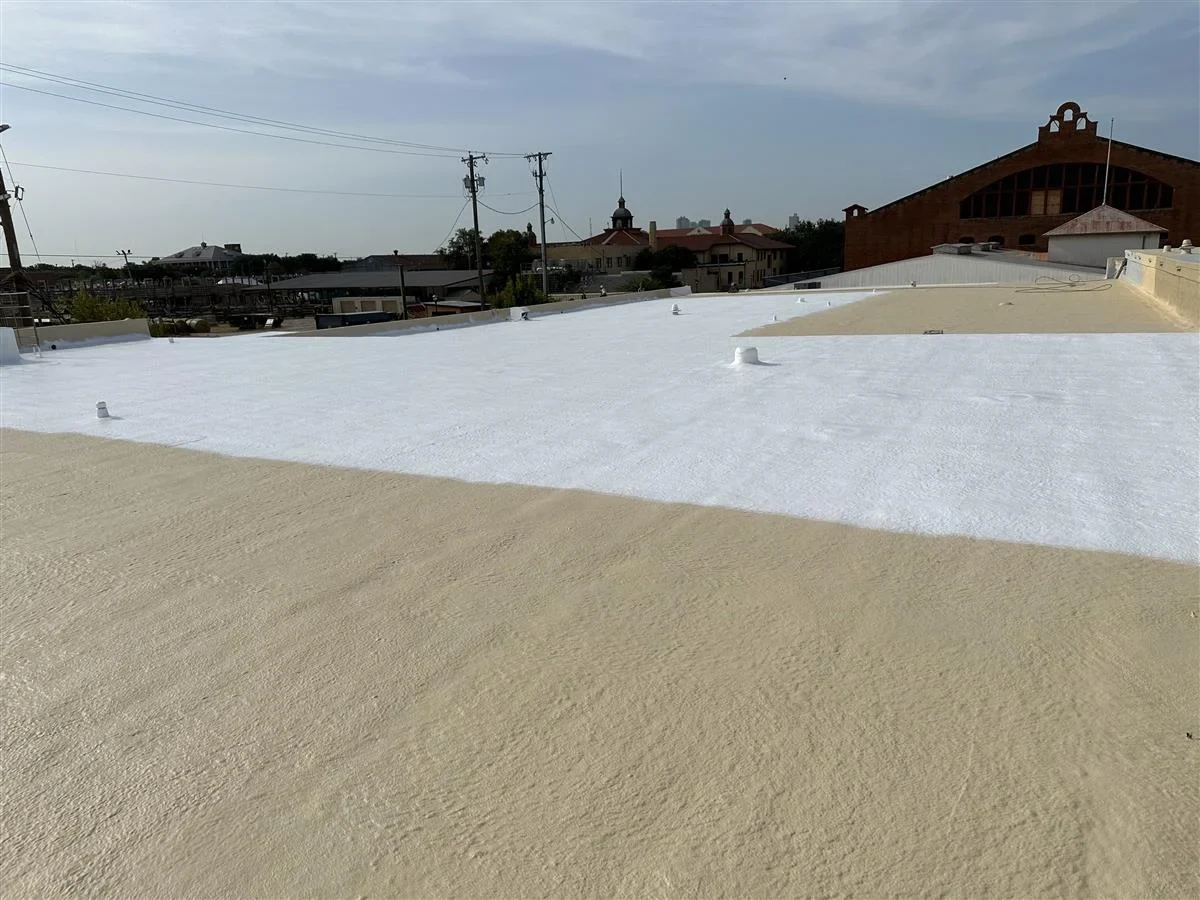
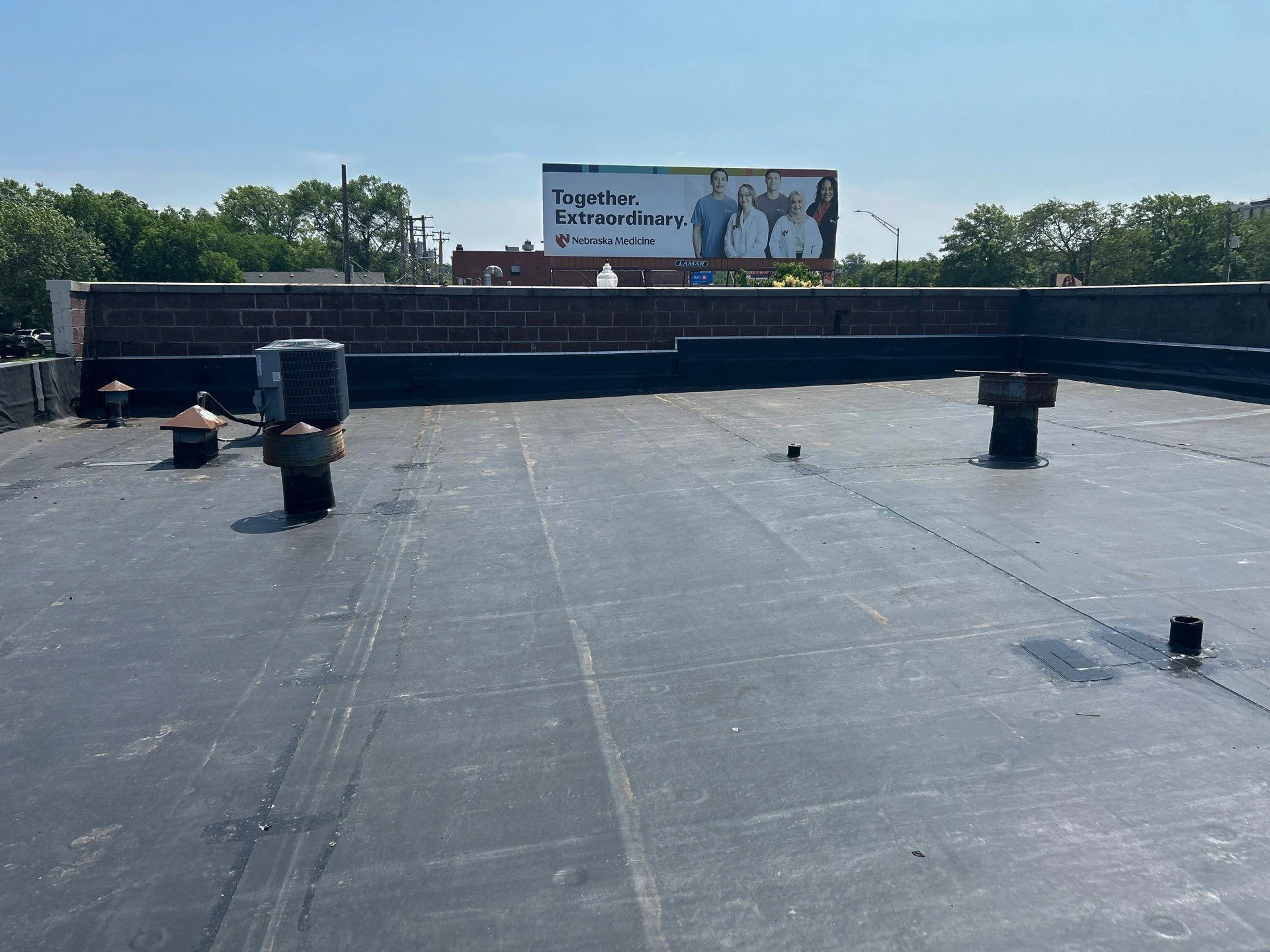
PVC Membrane for Chemical Exposure and Long-Term Weld Integrity
PVC is the membrane we reach for on Lincoln buildings where grease, oil, or chemical exposure would degrade a standard TPO sheet faster than normal. Restaurant exhaust plumes, manufacturing process vents, and university lab exhaust all put more chemical stress on a roof surface than a typical office building ever sees.
Chemical and Grease Resistance
The plasticized PVC compound resists petroleum-based grease and many common industrial chemicals better than TPO or EPDM, which is why we default to it near rooftop kitchen exhaust on retail strip anchors and near process venting at manufacturing sites along Lincoln's industrial corridors. A membrane that softens or degrades under grease exposure loses its watertight integrity years before a properly matched PVC sheet would show comparable wear.
University buildings with lab exhaust systems present a similar case. We ask about exhaust content during the site walk specifically because it changes the membrane recommendation and the flashing detail around the vent both.
Hot-Air Welded Seams and Long-Term Durability
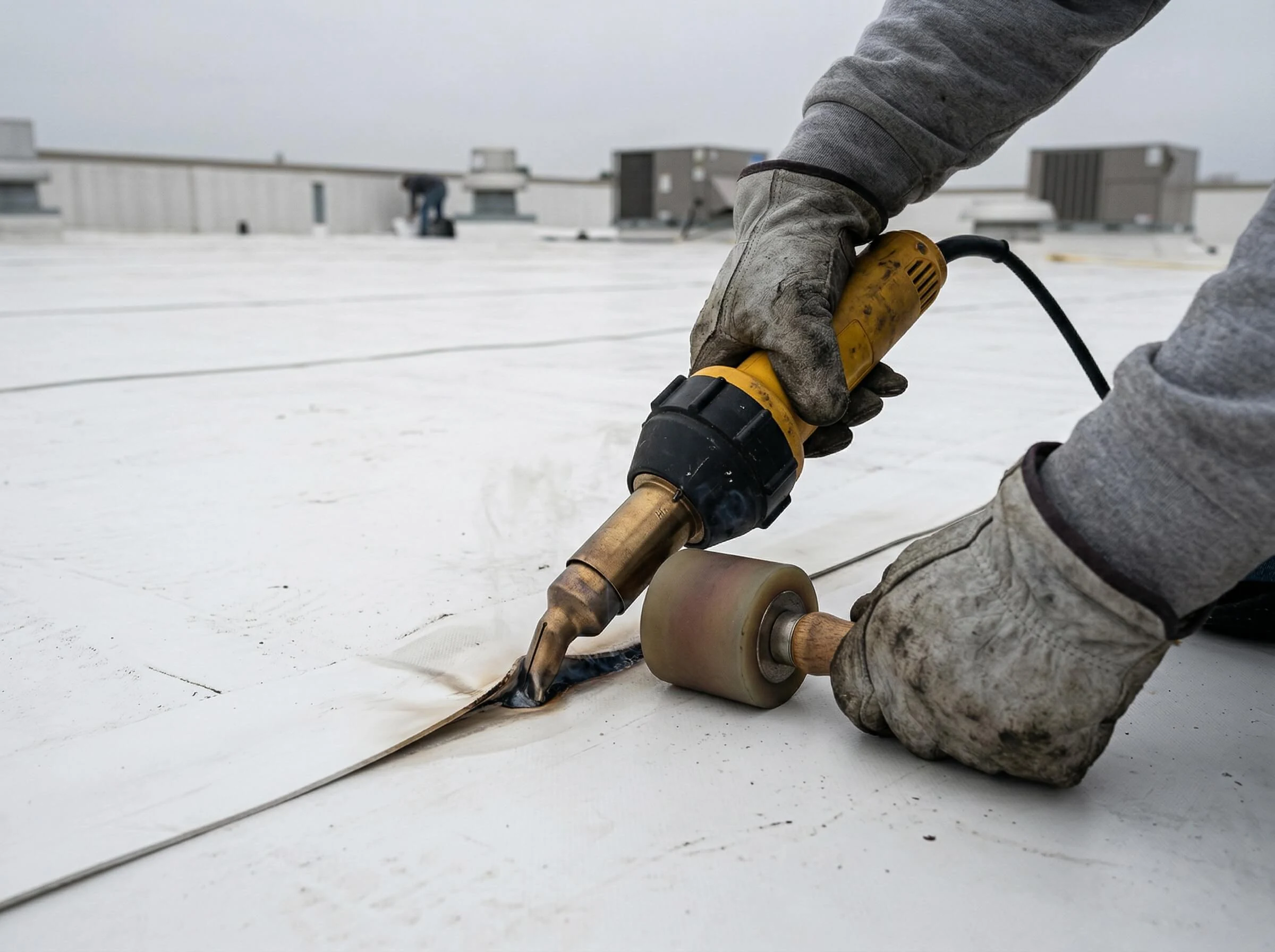
PVC seams are hot-air welded the same way TPO seams are, and a properly welded PVC seam typically outperforms an adhesive-based seam over decades of Nebraska thermal cycling. The weld fuses the two sheets into essentially one continuous piece of material at the overlap, which resists the pull-apart stress that repeated freeze-thaw and summer heat cycling puts on any seam.
We test every seam with a probe during installation and again at project closeout, logging weld temperature against the day's ambient conditions since Lincoln's spring installs often see morning-to-afternoon temperature swings wide enough to require welder adjustments mid-shift.
Wind Uplift and Hail Considerations
PVC membrane reaches strong FM uplift classifications in fully adhered and mechanically attached configurations, which suits Lincoln's flat, wind-exposed sites well. Reinforced PVC sheets also carry solid hail impact ratings, an important factor given the region's spring hail frequency, though as with any membrane we confirm the specific tested assembly rather than assuming thickness alone sets the rating.
Corner and perimeter fastening still needs to track the building's actual exposure category. We don't apply a single fastening pattern across every PVC project regardless of site conditions.
Reflectivity and Energy Performance
- White PVC ships with high factory reflectivity, among the higher options across common commercial membranes
- Reflective PVC lowers rooftop unit suction temperatures during Lincoln's humid summer stretch
- PVC holds its reflective finish well against UV exposure over time
- Paired with adequate polyiso insulation, PVC assemblies support strong whole-roof R-value
- Light-colored PVC reduces thermal shock at the membrane surface compared to dark roofing
Where PVC Fits on Lincoln Properties
Retail strip centers with restaurant tenants, manufacturing plants running process exhaust, and university or lab buildings are our most common PVC recommendations. It's a narrower fit than TPO for a general office building without chemical exposure, where the added cost of PVC doesn't buy a proportional benefit.
Existing PVC roofs approaching the end of their service life are also strong re-cover or tear-off candidates for another PVC system, since matching membrane chemistry avoids compatibility questions with old adhesive residue or flashing materials.
Detailing Roof Drains and Scuppers Under Chemical Exposure
Drains and scuppers near grease or chemical exhaust see concentrated exposure that the surrounding field membrane doesn't, since runoff tends to collect and route through these points. We use PVC-compatible drain flashing and inspect these details more frequently on properties with kitchen exhaust, since a compromised drain seal in a chemical-exposure zone fails faster than the same detail on a clean office roof.
Regular cleaning of grease traps and roof drains upstream of the membrane also extends the life of the surrounding PVC, since standing grease residue left to sit degrades the membrane surface over time even with a resistant material.
Matching PVC to Existing Rooftop Equipment
University and manufacturing buildings often carry a mix of older and newer rooftop equipment, and PVC's welded-boot detailing works cleanly around most standard curb and pipe penetrations. Where equipment gets added or relocated after the roof is installed, we prefer PVC's weldability for making a clean field modification rather than relying on sealant-based patches that don't hold up as well through Nebraska's temperature cycling.
We keep matching PVC membrane and flashing material on hand for warranty-period service calls so any future equipment change ties into the roof cleanly.
Cost Planning for Chemical-Exposure Roofs
Owners sometimes ask why we won't quote a lower-cost TPO alternative on a restaurant or manufacturing roof with known chemical exposure, and the honest answer is that the membrane cost difference is smaller than the cost of an early roof failure. We lay out the expected service life difference between PVC and a TPO membrane under the same chemical exposure so the decision is based on real numbers rather than upfront price alone.
Common Questions on PVC Roofing
Why choose PVC over TPO for a restaurant or manufacturing roof?
PVC resists grease and many industrial chemicals better than TPO, which extends membrane life where kitchen or process exhaust lands on the roof surface.
Is PVC more expensive than TPO?
Generally yes, PVC carries a higher material cost, which is why we reserve it for buildings where the chemical resistance actually matters rather than specifying it by default.
How does PVC perform in Lincoln's cold winters?
Quality PVC formulations stay flexible through the region's winter temperatures, though installation in very cold conditions requires adjusted welding procedures.
Can PVC be installed over an existing built-up roof?
Sometimes, depending on the substrate's condition and moisture content, which we verify with a roof evaluation before proposing a re-cover.
Do PVC seams need re-welding over time?
Well-executed original welds generally hold for the roof's service life, though we check seam integrity during regular inspections and address any isolated issues found.