60 Mil TPO for Lincoln Office and Institutional Roofs
Sixty mil TPO is the entry-thickness membrane we spec most often on Lincoln's low-rise office parks and back-office campuses around the Capitol district and the university corridor. It gives owners a reflective, heat-welded roof at a lower material cost than 80 mil, and for buildings without heavy foot traffic or steep hail exposure it holds up well through a normal service life.
Hail Impact Rating at 60 Mil
Nebraska sits inside the central hail belt, and Lincoln takes direct hits most springs. At 60 mil, a fleece-backed or scrim-reinforced TPO can carry a UL 2218 Class 4 impact rating, but a standard non-reinforced sheet at this gauge is thinner and more prone to bruising or fracture from larger stones. We check the manufacturer's tested assembly before quoting 60 mil on a property with a claims history, because the impact rating lives with the specific reinforced product, not the generic membrane thickness.
On buildings where hail risk is the deciding factor, we walk owners through the reinforced 60 mil option first and only drop to a lighter unreinforced sheet on low-slope areas that are already screened by parapets or adjacent structures.
Wind Uplift on Open, Flat Terrain
Lincoln's terrain west of the university is flat and largely unobstructed, which means roof edges and corners see higher uplift pressures than the field of the roof. Sixty mil TPO can hit FM 1-90 or higher uplift classifications depending on attachment pattern, insulation board, and deck type, but the fastening density has to match the actual wind zone map for the building's location, not a generic spec sheet number.
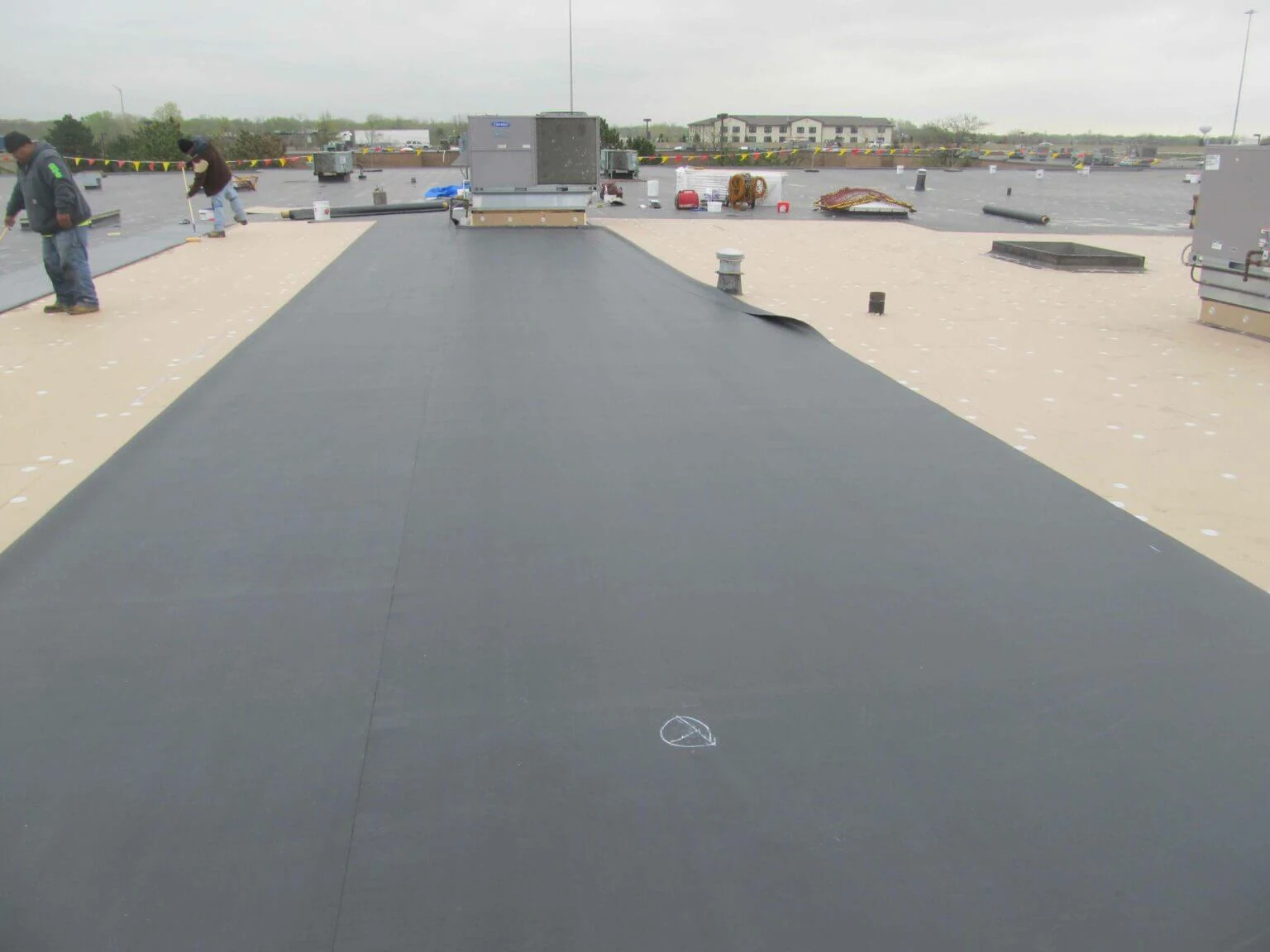
Mechanically attached 60 mil systems need more fasteners per board at the perimeter and corners than most owners expect once you run Lincoln's exposure category through the numbers. We'd rather add fastener rows now than field-repair a lifted edge after a spring squall line.
Reflectivity and Summer HVAC Load
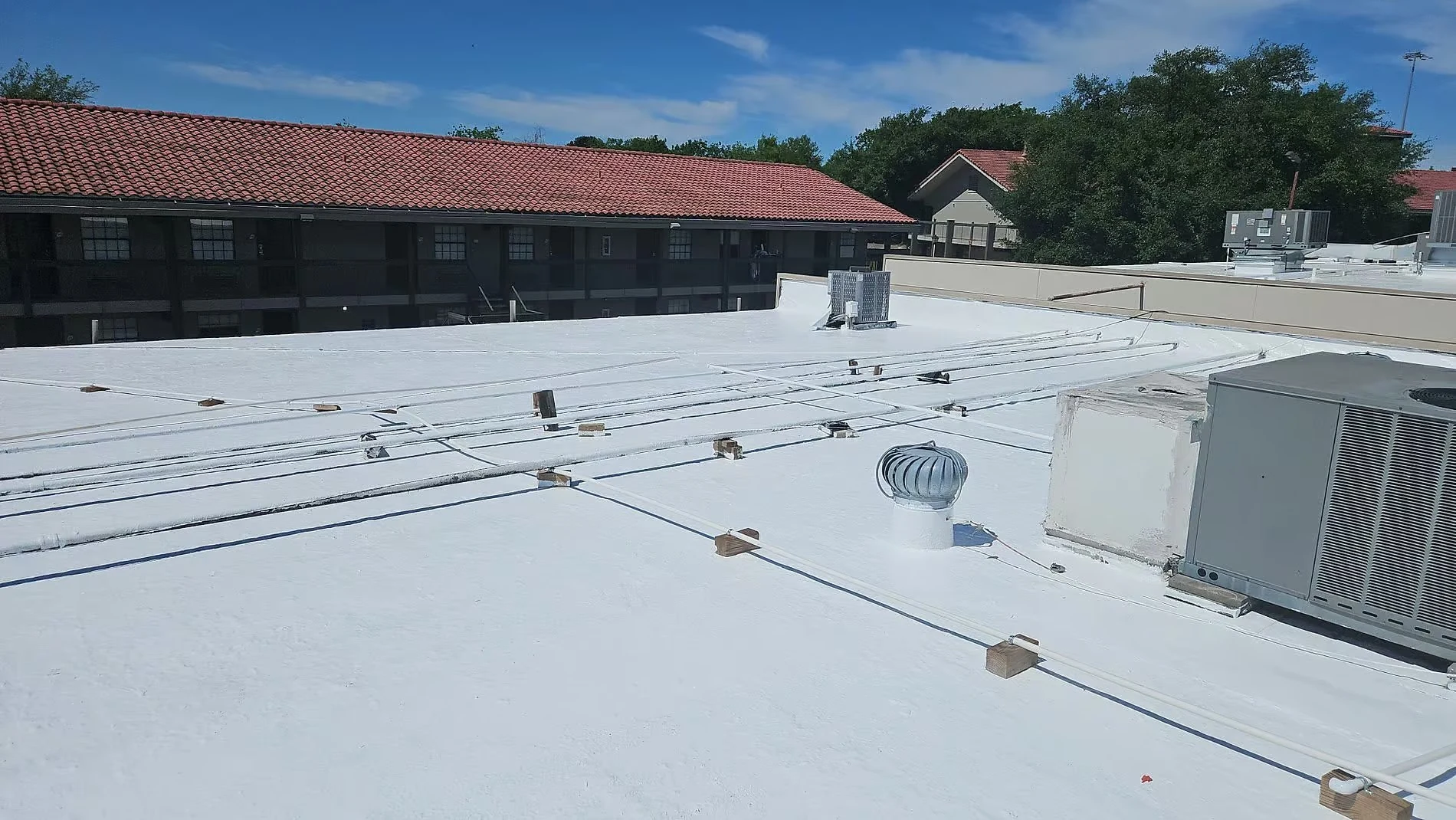
White 60 mil TPO ships with a factory reflectivity in the high 70s to low 80s percent range when new, which matters in Lincoln's humid continental summers where rooftop units run long hours against direct sun. A reflective membrane keeps deck surface temperatures well below a dark roof, which translates into lower suction-side air temperatures at the rooftop units and less compressor cycling on the hottest July and August afternoons.
That reflectivity fades gradually with dust, pollen, and general weathering, so we tell owners to expect a modest reflectivity drop over the first few years before it levels off, which is normal and doesn't indicate a failing membrane.
Where 60 Mil Fits and Where It Doesn't
- Single-story office and back-office buildings with limited roof traffic
- Retrofit re-cover jobs over sound existing insulation
- Budget-driven projects where a longer warranty term isn't the priority
- Buildings shielded from direct hail exposure by taller neighboring structures
- Not our first recommendation for exposed manufacturing roofs with heavy hail history
Installation Details That Affect Long-Term Performance
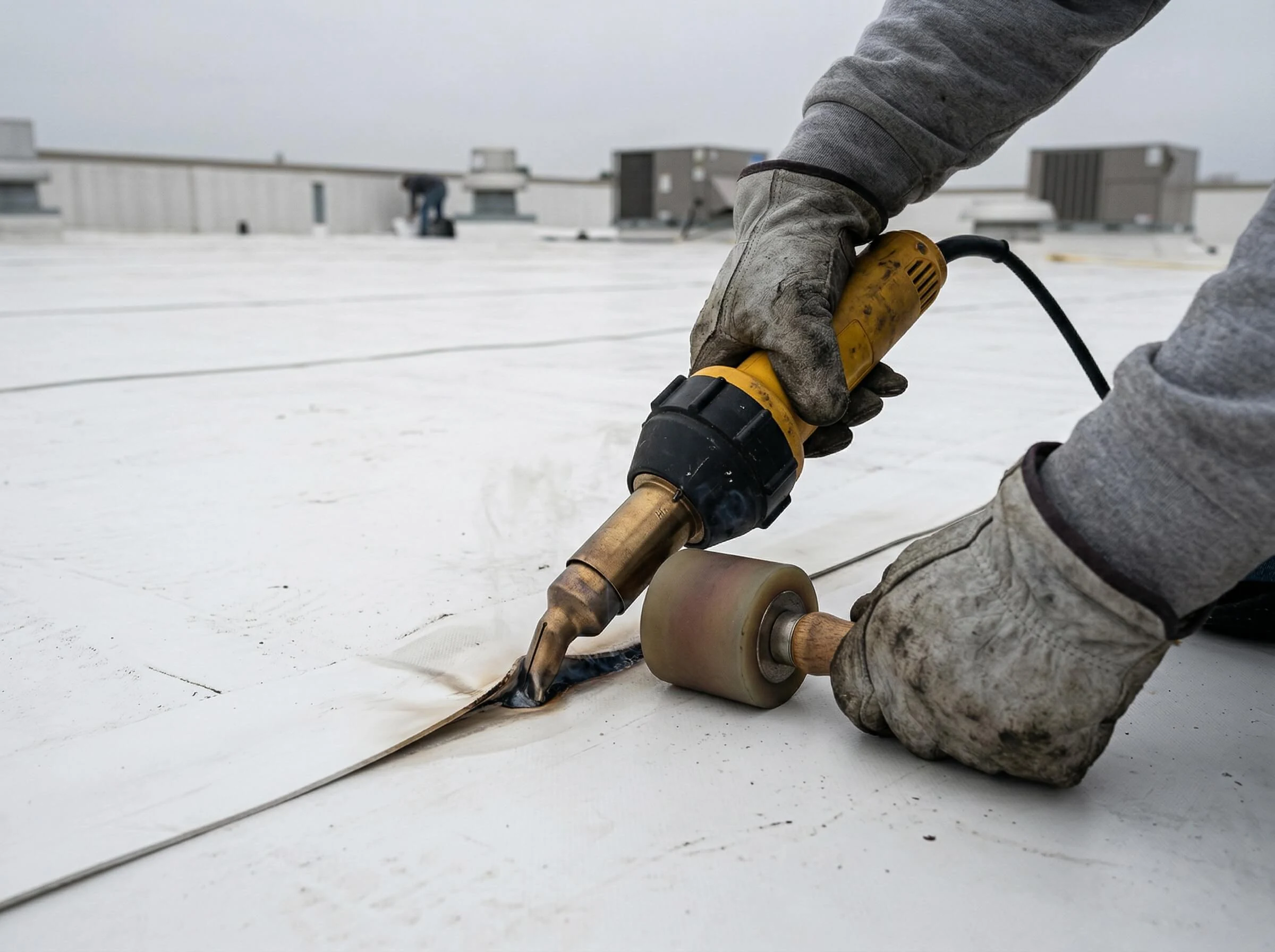
Seam welding quality matters more on thinner membranes because there's less material to tolerate an under-heated or over-heated pass. We run daily probe checks on every hot-air weld and keep welder temperature logs tied to ambient conditions, since Lincoln's spring temperature swings between morning and afternoon can shift weld settings mid-shift.
Insulation choice underneath the membrane also drives the effective R-value of the whole assembly. We typically pair 60 mil TPO with polyiso board sized to the building's existing thermal performance target rather than defaulting to a minimum code thickness.
Fastener Layout on Retrofit Projects
Re-cover jobs over an existing low-slope roof bring a variable most new-construction specs don't face: the condition and layout of whatever insulation is already down. Before we finalize a 60 mil fastening pattern on a re-cover, we probe the existing deck for wet insulation and confirm the board is sound enough to hold new fasteners at the density the wind zone requires.
On buildings near the university corridor where roofs have gone through several patch cycles over the years, that probing step often turns up soft spots that change the insulation replacement scope before we ever get to membrane selection.
Cold-Weather Installation Windows
Lincoln's roofing season narrows in late fall and doesn't fully reopen until temperatures stabilize in spring, and TPO welding quality drops once ambient and membrane temperatures fall below the manufacturer's minimum threshold. We schedule 60 mil TPO installs to avoid marginal cold-weather windows where weld quality would be inconsistent, rather than pushing a project through conditions that compromise the seams.
When a repair or small section can't wait for better weather, we adjust welder settings and add extra probe testing to confirm every seam still meets spec despite the colder start.
Common Questions on 60 Mil TPO
Is 60 mil TPO enough for a Lincoln hail claim history?
It depends on the specific reinforced product and its tested impact class. We review the assembly's Class 4 documentation against the building's claims record before recommending 60 mil over 80 mil.
Does 60 mil TPO cost less to install than 80 mil?
Material cost is lower per square, though labor and fastening requirements stay similar. The savings show up mostly in membrane cost, not overall project scope.
How much does reflectivity fade over time?
Expect a noticeable but not drastic drop in the first two to three years from surface weathering, after which reflectivity tends to stabilize barring heavy soiling.
Can 60 mil TPO go over an existing EPDM roof?
Sometimes, if the existing membrane is flat, dry, and structurally sound, but we evaluate the substrate and insulation condition first rather than assuming a re-cover is appropriate.
What warranty length is typical at this gauge?
Manufacturer warranties on 60 mil TPO commonly run shorter than 80 mil options, and the exact term depends on the attachment method and installer certification level.