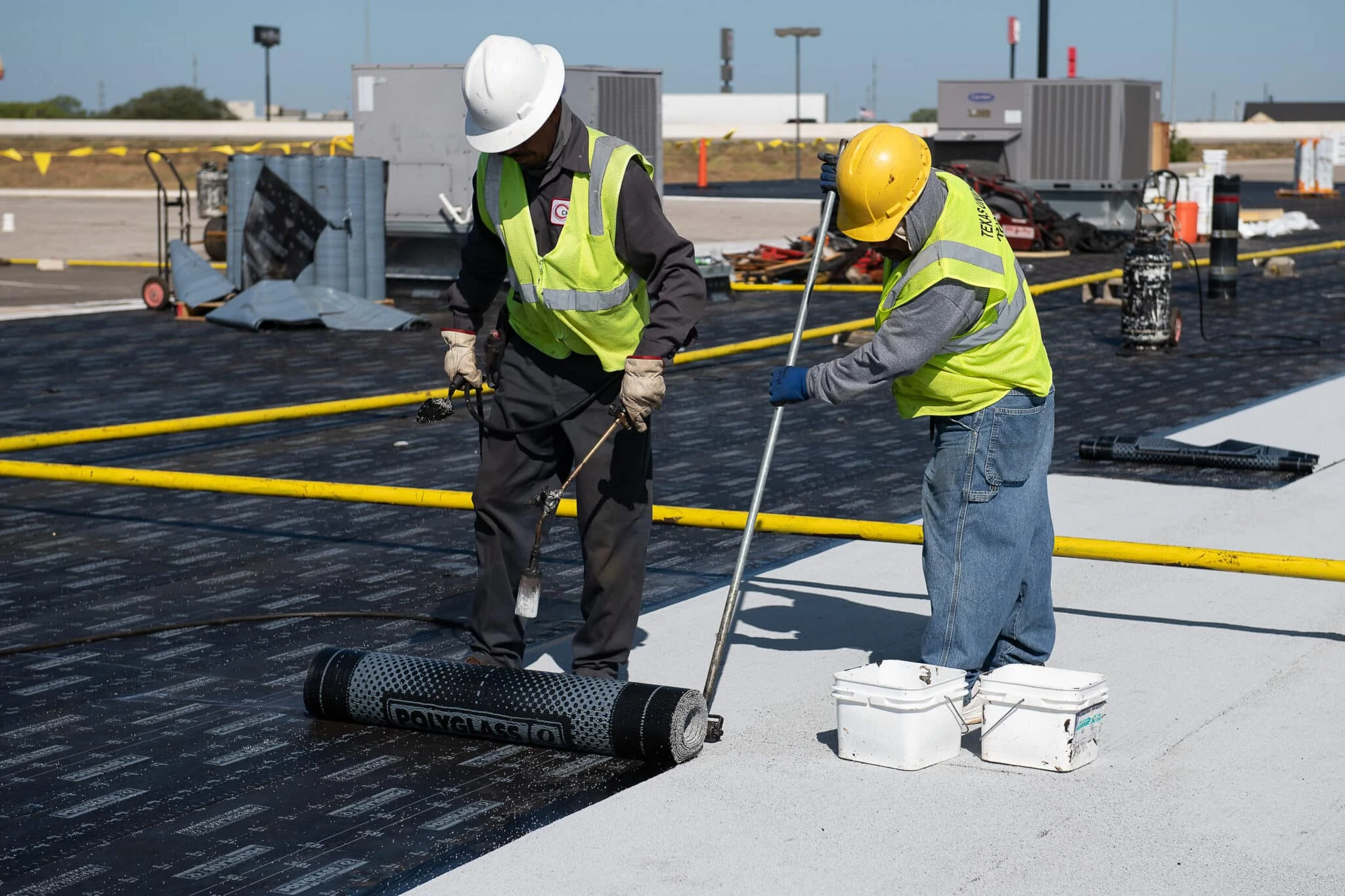
TPO Membrane Roofs Built for Nebraska Heat and Hail
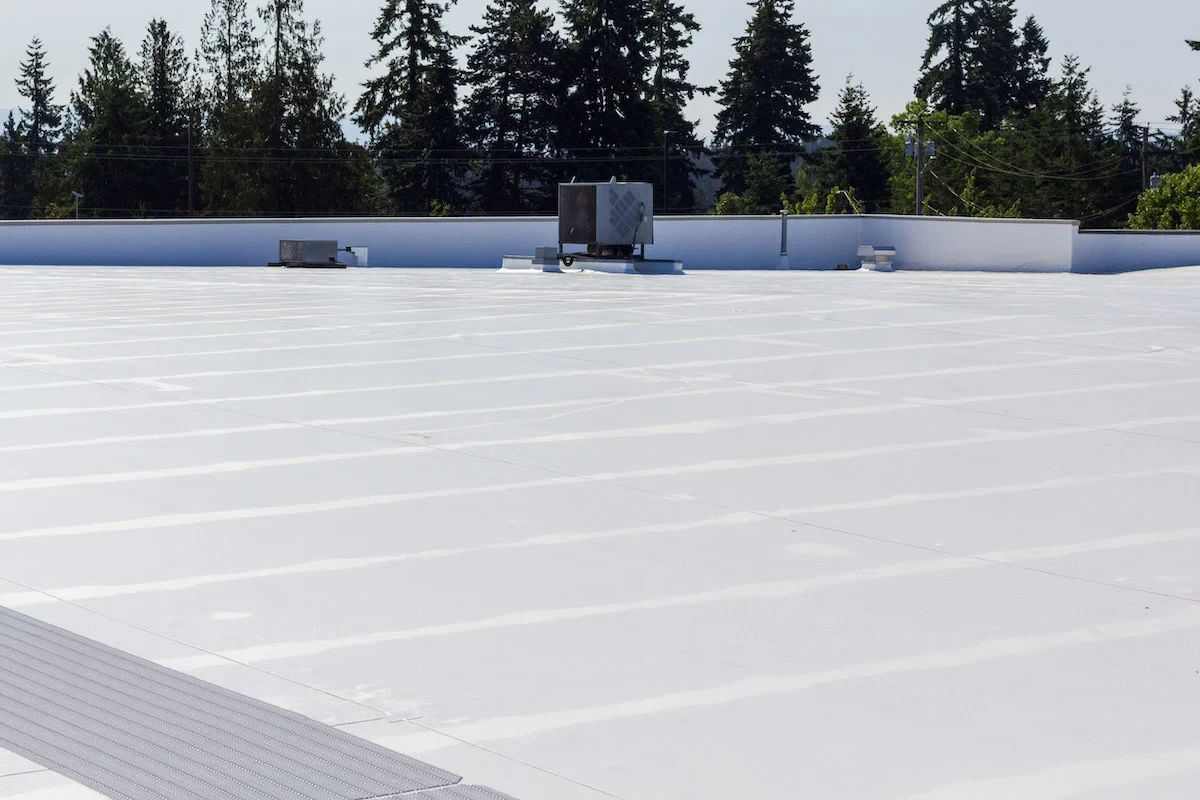
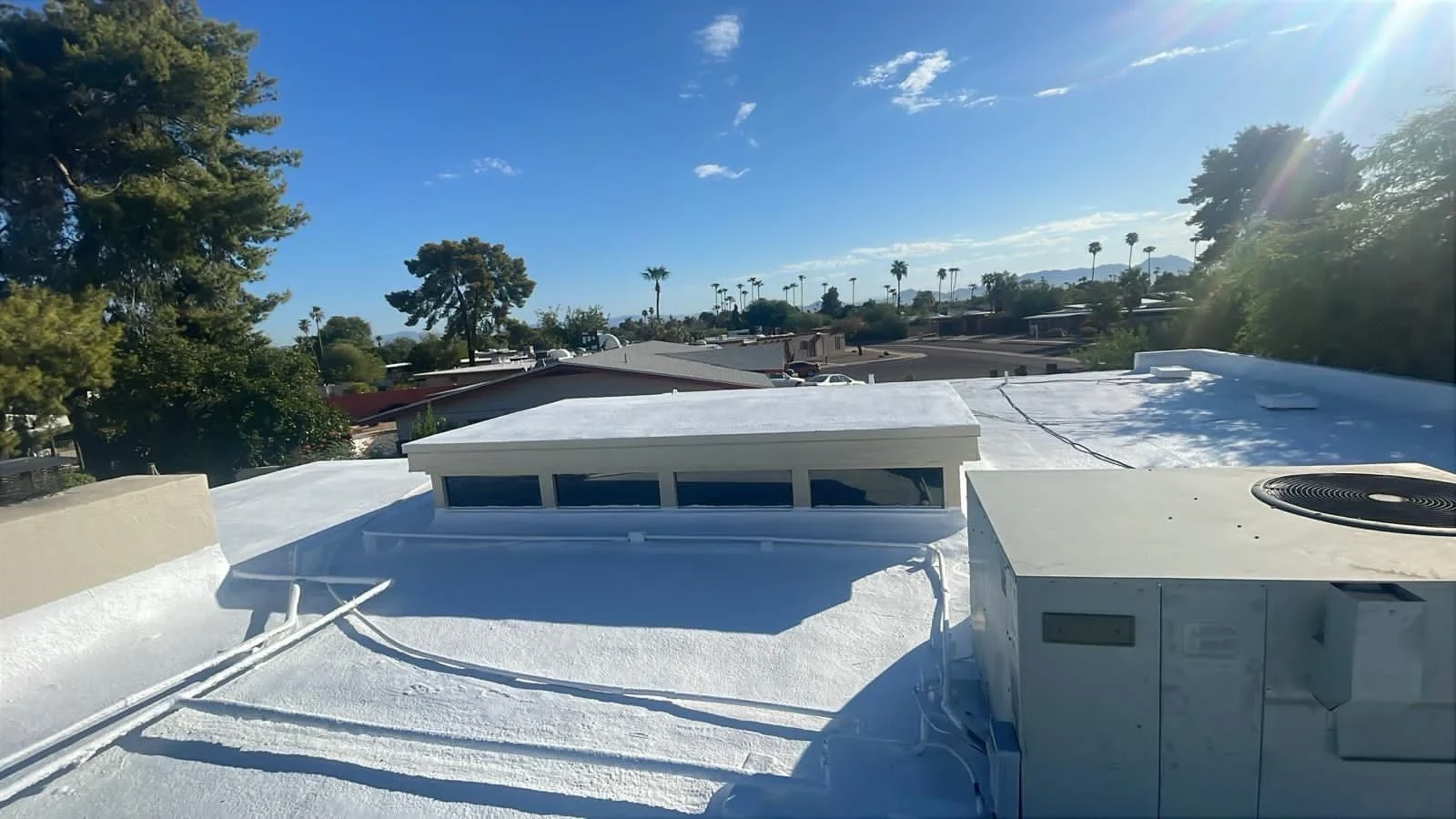
TPO is the single-ply membrane we install most often in Lincoln, and for a specific reason: the white or light-gray surface reflects summer sun instead of absorbing it, which matters on a roof that sits over rooftop units working overtime through a Nebraska July.
Reflectivity and the Cooling Load
A dark roof surface can run 40 to 60 degrees hotter than a reflective one on a still, sunny afternoon. That heat migrates through the insulation into the deck and, on buildings with less-than-ideal insulation, into the conditioned space below. For office buildings and insurance or finance back-office campuses running call-center floors around the clock, that extra heat load shows up directly on the electric bill and on how hard the rooftop units have to cycle.
TPO's factory-white or light-colored membrane keeps surface temperatures well below asphalt-based alternatives. Over a fifteen-year service life, that difference in rooftop unit run time adds up to real savings, particularly on single-story buildings with a high roof-area-to-floor-area ratio, which describes a lot of Lincoln's suburban office parks.
The insulation package underneath the membrane matters just as much as the membrane color. We check R-value against current energy code minimums during every TPO project, since pairing a reflective surface with thin or compressed insulation only solves half the problem. A building that upgrades both together sees the clearest reduction in rooftop unit cycling through the hottest stretch of summer.
Seam Strength Against Hail and Wind
TPO seams are hot-air welded, not glued or taped, which fuses the sheets into essentially one continuous membrane at the overlap. That matters here because Lincoln's spring storm season brings both hail and straight-line wind, sometimes in the same system. A welded seam resists the wind uplift that can peel back a poorly adhered membrane at the parapet edge, and the membrane itself holds up well against hail impact when specified at adequate thickness with the right cover board underneath.
We specify TPO thickness and reinforcement based on the building's exposure and roof height, not a single default across every job. A low warehouse roof exposed to open ground on the edge of the city sees different wind loading than a mid-rise office tower downtown.
Where TPO Fits in Lincoln
We install TPO most on:
- Office parks and back-office campuses south and west of downtown
- Retail and multi-tenant strip buildings with wide, flat roof areas
- University-adjacent administrative and support buildings
- Medical office buildings needing tight indoor climate control
- New commercial construction where reflectivity is part of the energy plan
It's a less common fit on buildings with heavy foot traffic or frequent rooftop equipment servicing, where a thicker, more puncture-resistant membrane may be worth the trade-off.
Installation Approach
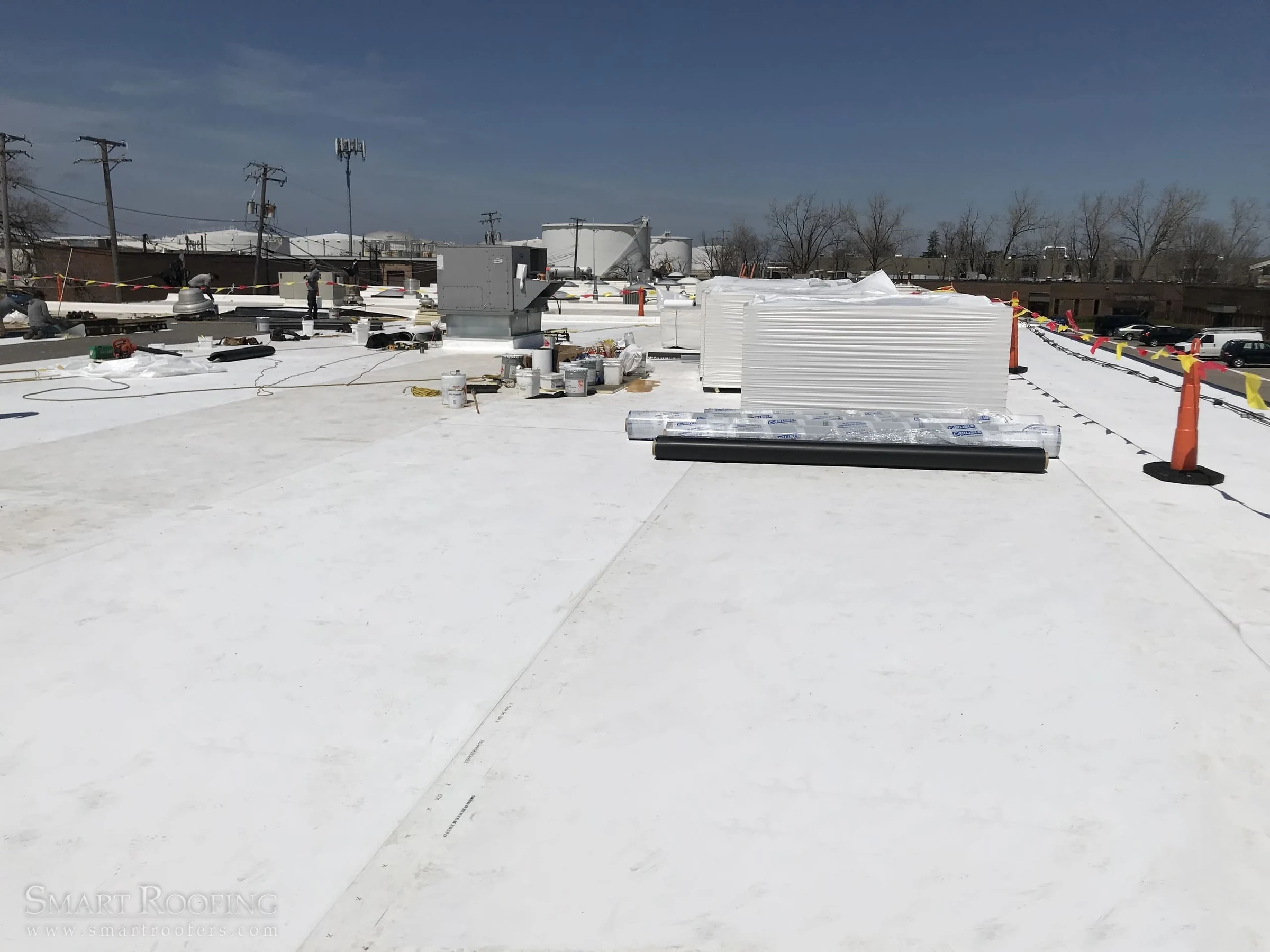
We install TPO either fully adhered, mechanically fastened, or ballasted depending on the deck type, insulation thickness, and wind exposure at that specific address. Fully adhered systems give the cleanest look and the best wind performance on most commercial decks, but mechanically fastened systems can be faster to install on large open roofs where schedule matters as much as final appearance.
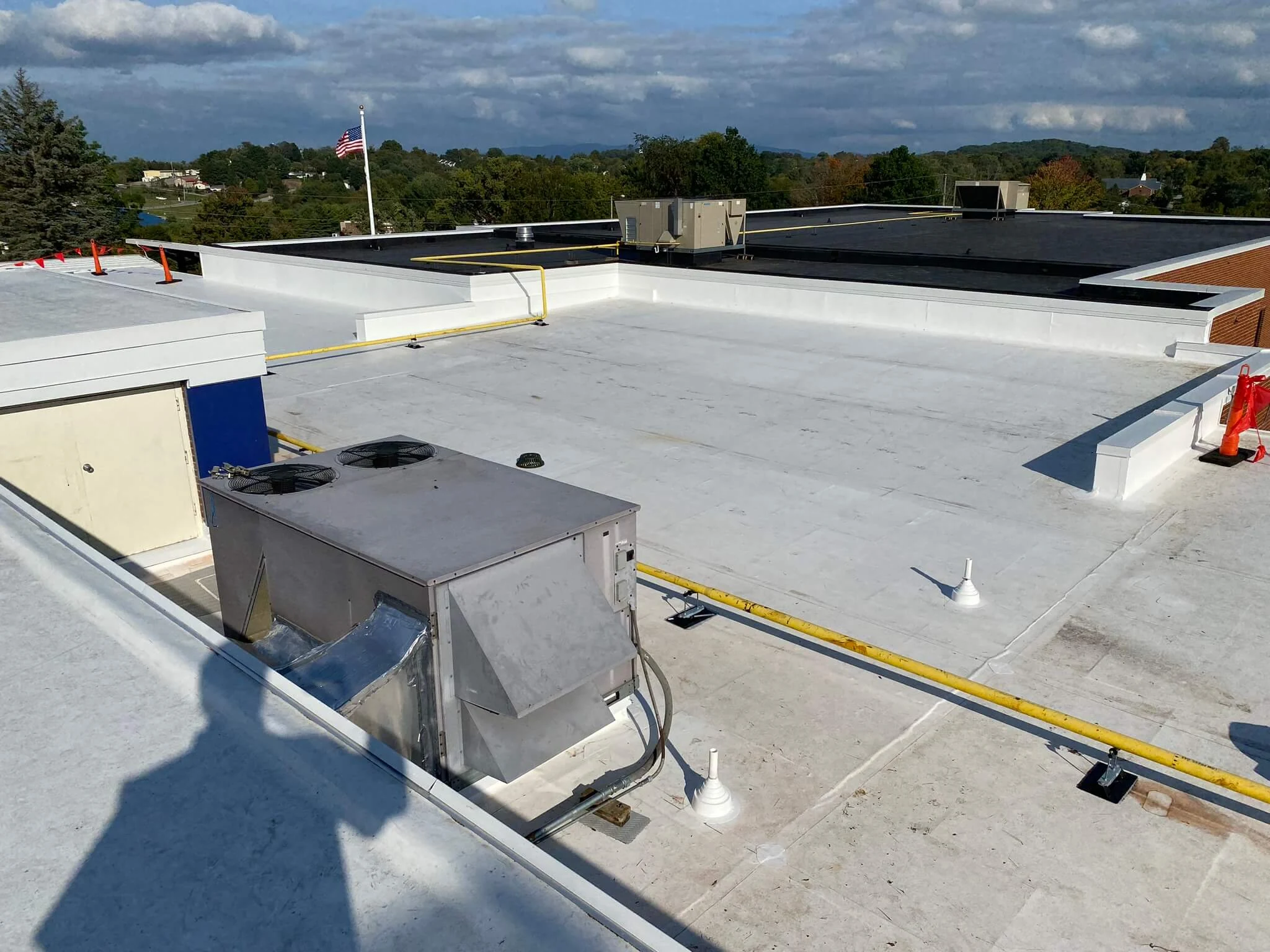
Flashing detail at parapets, drains, and rooftop unit curbs gets as much attention as the field membrane. Most TPO failures we get called out to repair started as a flashing detail that was rushed, not a problem with the field sheet itself.
Deck condition also drives the decision between attachment methods. A steel deck in good condition on a newer office building often takes a fully adhered system without issue, while an older wood deck with some deterioration may need mechanical fastening to distribute load properly across sound framing members. We evaluate deck condition before quoting an attachment method rather than assuming one approach fits every roof.
Maintenance That Extends Service Life
TPO holds up well with minimal maintenance, but seam integrity should be checked at least once a year, especially after a hailstorm large enough to leave visible dents in HVAC housings or metal trim nearby. Catching a seam that has started to lift before it becomes a leak is a fraction of the cost of chasing water intrusion after the fact.
We recommend a post-storm walk after any hail event large enough to leave marks on vehicles or exterior AC units, even if there's no sign of a leak inside yet. A membrane can carry hidden bruising from an impact that hasn't turned into a puncture, and catching that early keeps a manageable repair from becoming a full replacement two years down the road.
Common Questions
How does TPO compare to EPDM for a Lincoln roof?
TPO's reflective surface reduces summer cooling load more than EPDM's typically dark surface, but EPDM can offer more flexibility in extreme cold. We weigh both against the building's use and existing insulation before recommending one.
Will TPO show hail damage the way asphalt shingles do?
Not usually in the same visible way. Hail impact on TPO can bruise or puncture the membrane without an obvious dent, which is why post-storm inspection matters more than a visual check from the ground.
How long does a TPO roof typically last in this climate?
Service life depends heavily on installation quality and maintenance, but a properly installed and maintained TPO roof commonly performs well through two decades of Nebraska seasons.
Can TPO be installed over an existing roof?
Sometimes, as a recover system, if the existing roof and insulation are dry and structurally sound. We evaluate that on-site rather than assuming it will work.
Does color choice matter beyond white?
White maximizes reflectivity, but some owners choose gray for appearance or glare concerns near flight paths. We discuss the energy trade-off either way before the order goes in.