Silicone Coating to Extend an Existing Roof's Service Life
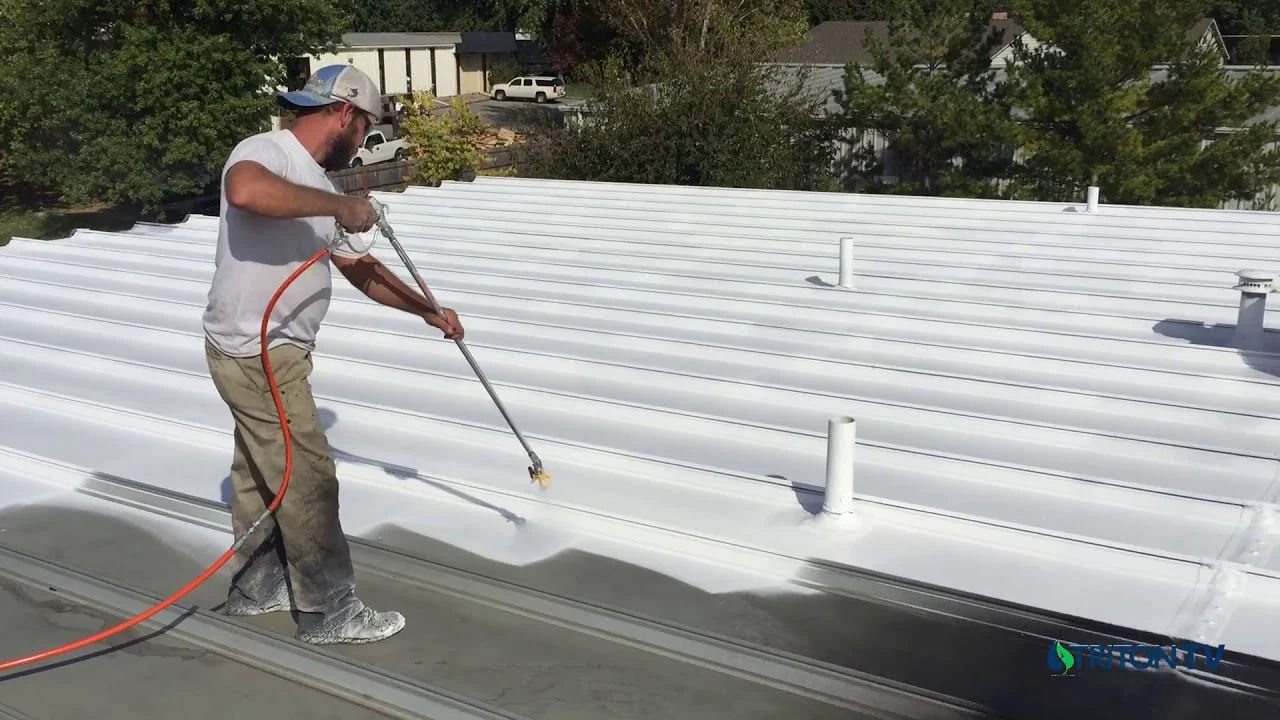
Silicone coating is our default recommendation when a Lincoln building's roof membrane is aging but still structurally sound, and a full tear-off isn't yet justified. It restores watertightness, resets UV protection, and can meaningfully improve reflectivity on a roof that's currently absorbing far more heat than it should.
High Reflectivity and Cooling Impact
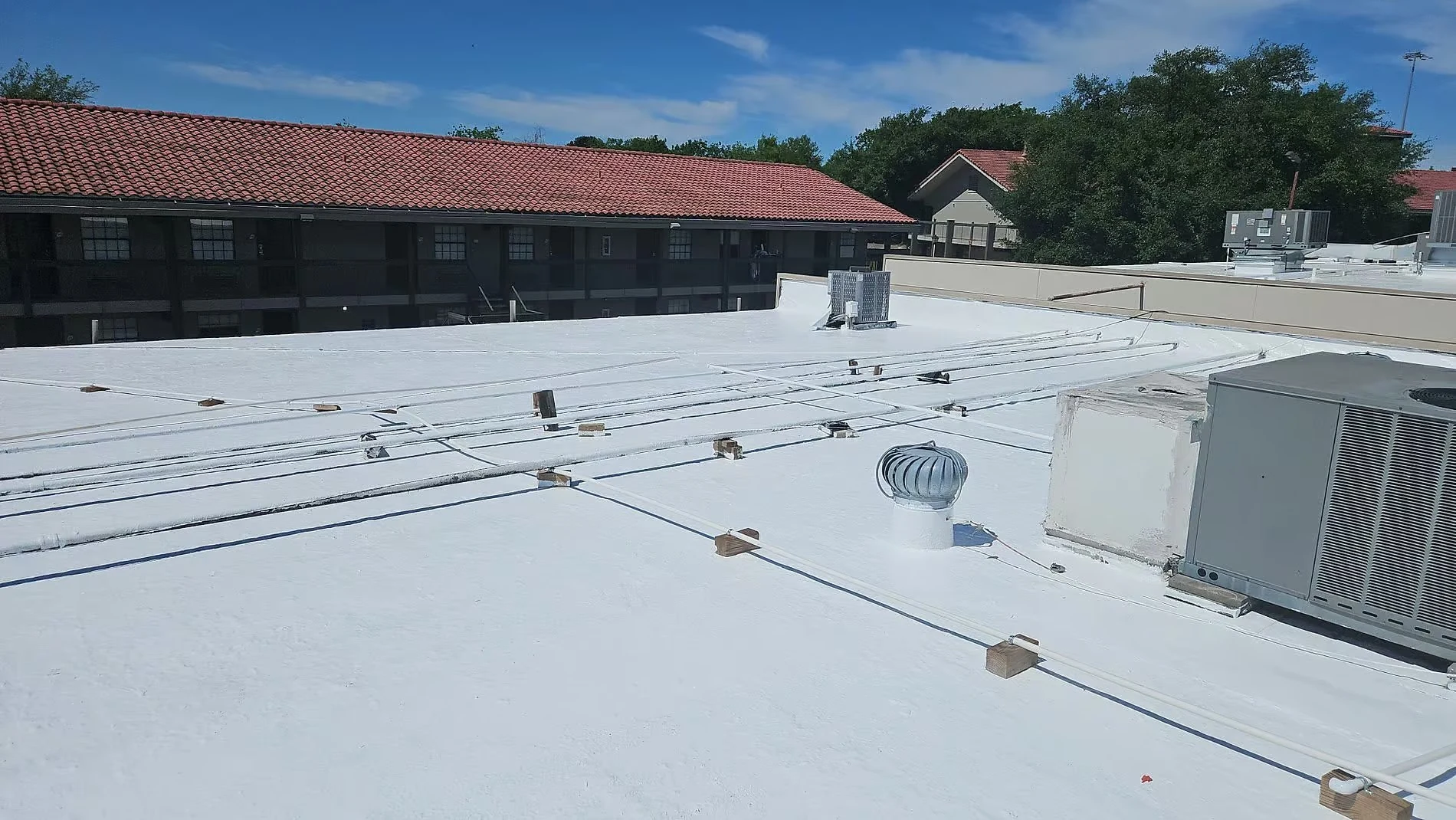
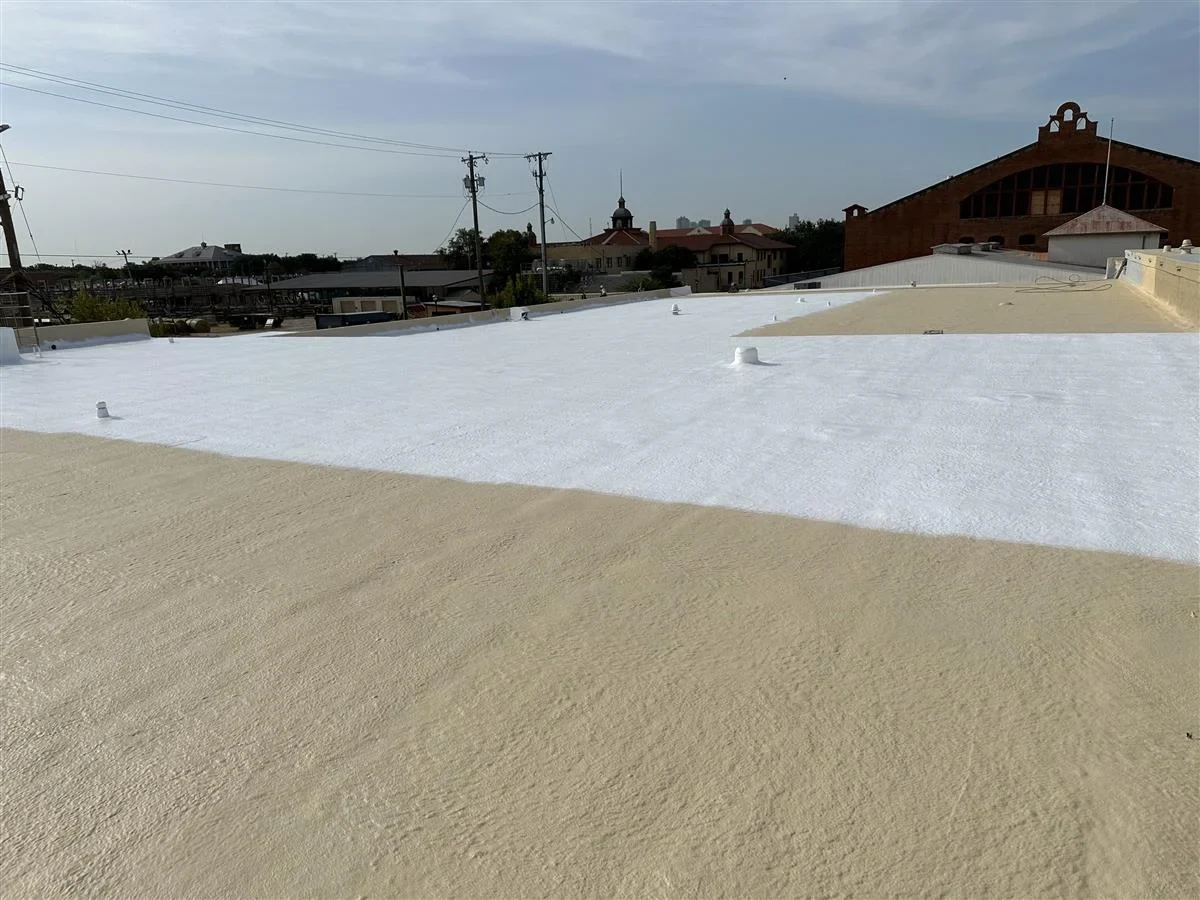
Fresh silicone coating applied in white achieves reflectivity figures near the top of the range for any roof surface, which matters directly on Lincoln buildings where the existing membrane has darkened or weathered over years of sun exposure. Dropping deck surface temperature by coating an aging dark roof translates into lower rooftop unit run time through the summer stretch, particularly on insurance and finance office buildings running long occupied hours.
Unlike a membrane's factory reflectivity, coating reflectivity can be refreshed with a recoat cycle down the road, which gives owners a repeatable way to maintain energy performance rather than a one-time value that only declines.
Ponding Water Resistance
Silicone resists degradation from standing water better than most other coating chemistries, which is the main reason we specify it over acrylic on roofs with any ponding areas. Flat Lincoln roofs with marginal drainage slope or roofs that have settled slightly over the years often collect standing water after spring rain events, and a coating that breaks down under that exposure defeats the purpose of the restoration.
We still address the underlying drainage issue where practical, since a coating manages the symptom of ponding better than any coating solves the root slope problem.
UV Stability Through Nebraska Summers
Silicone holds up to prolonged UV exposure better than many alternative coatings, resisting the chalking and embrittlement that shortens coating life under intense summer sun. Given how many hours of direct exposure a Lincoln roof gets between April and September, UV stability isn't a minor spec detail, it's the main variable determining how long the coating investment actually lasts.
We apply coating at manufacturer-specified thickness rather than stretching material thin to cover more square footage, since under-thickness application is the most common reason a silicone coating underperforms its rated life.
What a Coating Restoration Involves
- Full roof inspection to confirm the substrate is a viable coating candidate
- Pressure washing to remove dirt, chalk, and biological growth
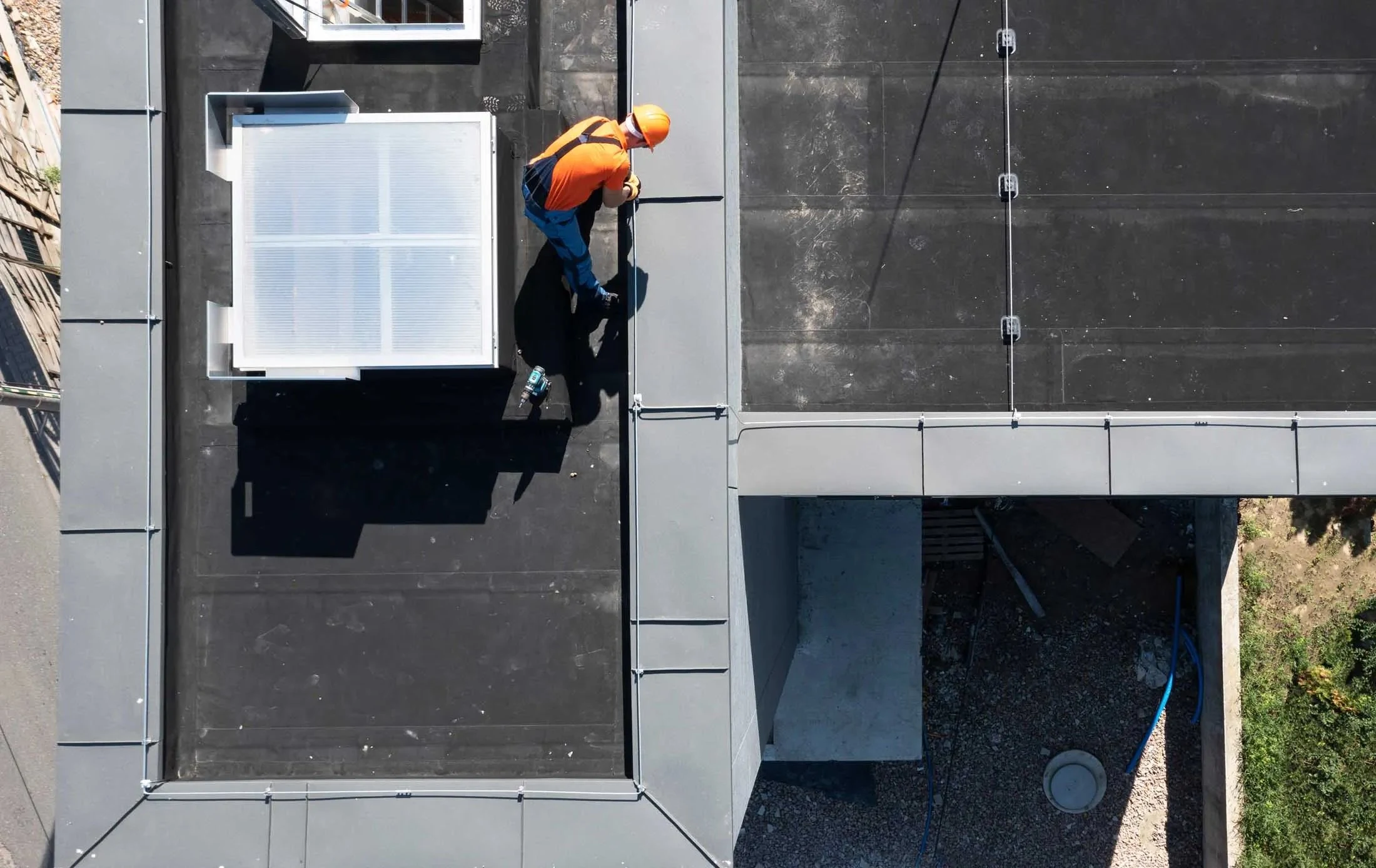
- Repair of existing punctures, splits, and failed seams before coating
- Reinforced fabric detail at seams, penetrations, and drains
- Coating applied at rated thickness, sometimes in two passes
- Post-application inspection to confirm coverage and mil thickness
When Coating Makes Sense vs. Replacement
Coating works best on a membrane that's still intact structurally with isolated wear rather than widespread membrane failure or saturated insulation underneath. We core sample or moisture-scan the roof before recommending coating, because coating over trapped moisture just seals the problem in rather than resolving it.
On roofs with extensive hail damage, torn seams across large areas, or wet insulation, we recommend full replacement instead of coating, even though coating is the lower-cost option upfront.
Preparing the Substrate Before Coating
Coating performance depends heavily on how well the existing membrane is cleaned and repaired beforehand, more so than with a new membrane install where the surface starts clean by default. We pressure wash to remove chalk, dirt, and biological growth, then let the roof dry fully before any coating application, since moisture trapped under a fresh coat can cause adhesion failure down the line.
Isolated blisters, splits, and failed seams get cut out and patched with compatible repair material before coating goes down, rather than coating over a defect and hoping the added mil thickness bridges the problem.
Coating as Part of a Long-Term Roof Plan
A silicone coating restoration works best as one step in an ongoing maintenance plan rather than a one-time fix-and-forget project. We schedule periodic inspections after coating to track wear patterns, ponding behavior, and reflectivity, and we plan the eventual recoat cycle around what those inspections show rather than a fixed calendar date alone.
For owners weighing coating against a full tear-off, we lay out both the near-term cost difference and the extended timeline coating buys before the roof eventually needs full replacement.
Warranty Coverage on Coating Restoration Projects
Coating manufacturers typically offer warranty terms tied to applied mil thickness and substrate condition at the time of application, which is different from a new-roof warranty structure. We document substrate condition and coating thickness thoroughly at project closeout so the warranty paperwork accurately reflects what was actually installed, giving the owner a clear record if a coverage question comes up later.
Common Questions on Silicone Coating
How long does a silicone coating typically last?
Service life depends on the substrate condition and applied thickness, but a properly installed silicone coating extends roof life for a meaningful number of years before a recoat is needed.
Can silicone coating go over any existing membrane?
Most single-ply, modified bitumen, and metal roofs are viable candidates, though we confirm compatibility and substrate condition before proposing coating on any specific roof.
Does coating stop active leaks?
Coating addresses surface wear and minor porosity, but active leaks from torn membrane or failed flashing need repair before coating, not instead of it.
Is silicone coating slippery when wet?
Some silicone coatings are more slick than the original membrane surface; we can specify a granulated or textured top coat where foot traffic is frequent.
How does silicone compare to acrylic coating for ponding areas?
Silicone tolerates standing water significantly better than acrylic, which is why we default to it on any roof with documented ponding.