Edge Metal, Coping, and Gutter Work for Lincoln Commercial Roofs
The roof perimeter takes more abuse than the field membrane most owners think about. Edge metal, parapet coping, and gutters manage water at the exact point where wind, freeze-thaw cycling, and drainage volume all concentrate, and a failure at any one of them sends water straight into the wall assembly or back under the membrane edge.
Why Perimeter Details Fail First
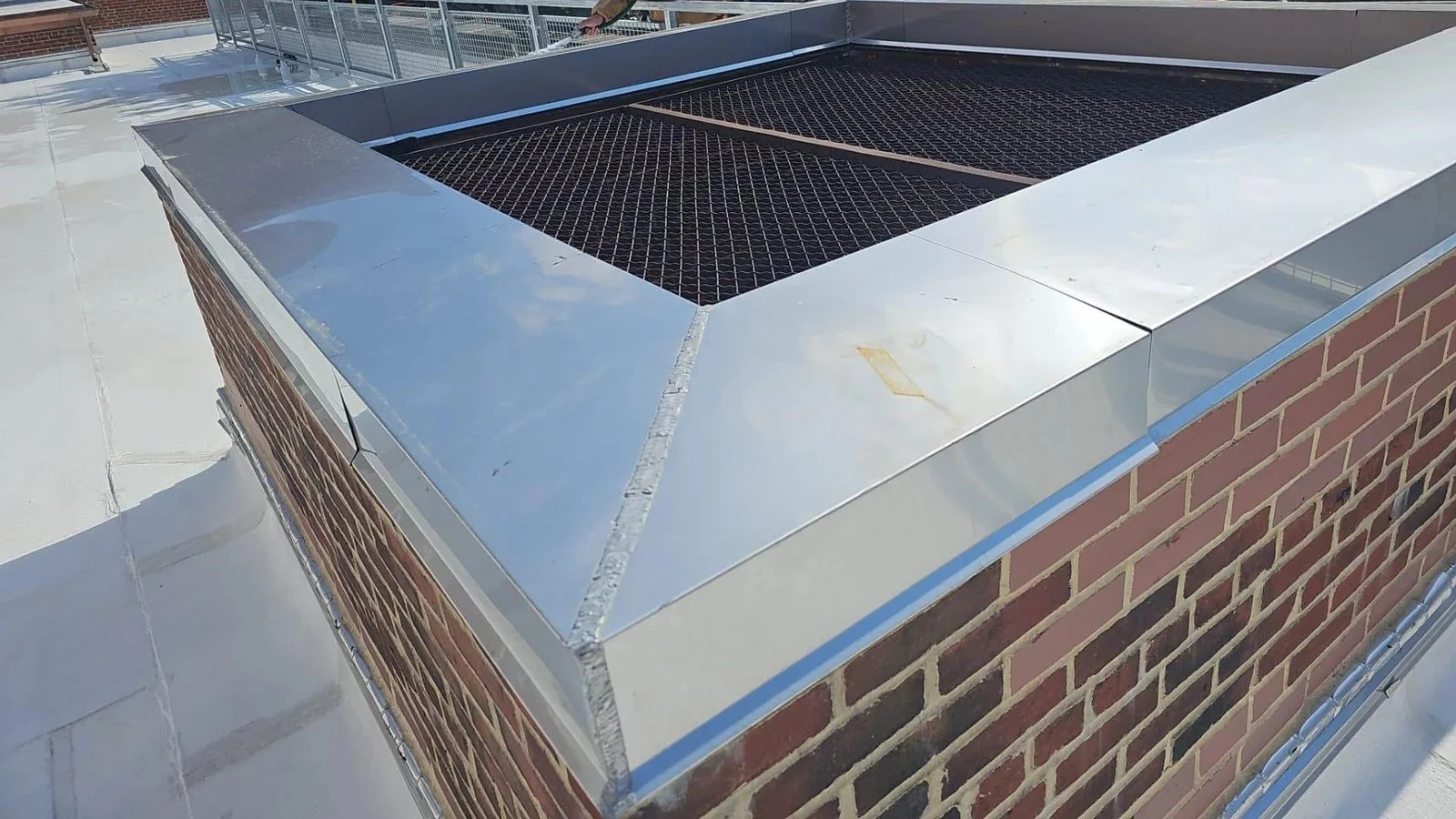
Edge metal and coping joints move more than owners expect , thermal expansion, wind flex, and the freeze-thaw cycle all work on the seams and fasteners holding these components in place. Once a coping joint opens even slightly, water gets behind it, freezes in winter, and widens the gap further with each cycle. By the time a leak shows up on an interior wall, the coping has often been compromised for a season or two already.
Edge Metal Systems We Install and Repair
Edge metal secures the membrane termination at the roof perimeter and has to handle both wind uplift forces and drainage flow off the field. We install and repair edge metal to current wind uplift standards for Lincoln's exposure category, with fastening spacing tightened at corners, where uplift forces concentrate hardest during a straight-line wind event or spring storm system.
- Edge metal replacement and re-fastening to current wind ratings
- Parapet coping cap resealing and joint repair
- Gutter clearing and reslope correction for proper drainage
- Downspout inspection and blockage clearing
- Wall flashing integration at coping and edge transitions
- Sealant renewal at expansion joints and coping seams
Parapet Coping and the Freeze-Thaw Cycle
Coping caps sit exposed to more temperature swing than almost any other roof component, since they're heated by sun on one side and exposed to wind on the other. That constant expansion and contraction works joint sealant loose over time, and once winter moisture gets behind an open joint, freeze expansion can crack the seal wide open by spring. We reseal and re-fasten coping joints as a standard part of both repair calls and seasonal maintenance, since it's one of the cheapest problems to fix early and one of the most expensive to ignore.
Gutters and Drainage on Lincoln's Building Stock
Older commercial buildings around downtown Lincoln and the near-campus area often have gutter and downspout systems that were sized for a different roof configuration decades ago, or that have simply never been cleared of debris on a regular schedule. Clogged gutters back water up against edge metal and fascia, which accelerates corrosion and can drive water back under the membrane edge. We check and clear gutters as part of both dedicated perimeter work and general maintenance visits.
Wind-Rated Fastening for Open Plains Exposure
Nebraska's open terrain means wind loads on a building perimeter can be significant, especially on taller structures or buildings with limited surrounding wind breaks. We match edge metal and coping fastening patterns to the building's actual wind exposure rather than a one-size-fits-all spec, with extra attention at corners and terminations where failures concentrate first.
Signs Your Perimeter Details Need Attention
Visible gaps at coping seams, rust streaking below edge metal, gutters that overflow during moderate rain, or interior stains near exterior walls are all signals worth a look before they become a bigger repair. Perimeter issues are also some of the easiest damage to miss during a quick roof walk, since they're often at eye level from the roof edge rather than in the open field.
Material Selection for Long-Term Perimeter Durability
Edge metal and coping cap material matters as much as the installation itself. We typically recommend heavier-gauge aluminum or galvanized steel over thin, budget-grade metal for Lincoln's climate, since thin material dents easily under hail impact and fatigues faster through repeated freeze-thaw expansion and contraction. The upfront cost difference is small compared to the cost of replacing failed perimeter metal twice as often.
For buildings near industrial areas with elevated exposure to airborne debris or corrosive exhaust, we also factor in coating and finish options that resist pitting and premature corrosion, since a compromised finish accelerates every other failure mode described above. We walk owners through the tradeoffs between material upgrade cost and expected service life before recommending a spec, rather than defaulting to whatever's cheapest on the supplier's shelf that week.
Common Questions on Edge Metal and Coping
How often should coping joints be resealed?
We check coping condition at every maintenance visit and typically recommend resealing every few years, sooner if a section shows visible joint separation or sealant cracking from sun and cold exposure.
Can bad edge metal cause a roof leak even if the membrane is fine?
Yes. Edge metal failure lets water get behind the membrane termination even when the field membrane itself is in good shape, which is why perimeter details need their own dedicated inspection separate from a field-membrane check.
Do you clear gutters as part of maintenance?
Yes, gutter and downspout clearing is a standard part of our seasonal maintenance visits, since clogged gutters contribute directly to perimeter water damage.
Why does wind matter so much for edge metal fastening?
Open plains wind exposure puts real uplift force on roof edges and corners, and under-fastened edge metal is one of the most common failure points during a straight-line wind event.
Can perimeter damage be storm-related for insurance purposes?
Wind and hail can both damage coping, edge metal, and gutters, and we document that damage the same way we would for field membrane damage to support your insurance conversation, including photos and measurements specific to the affected perimeter sections.