Standing Seam Metal for Buildings That Take a Direct Hit
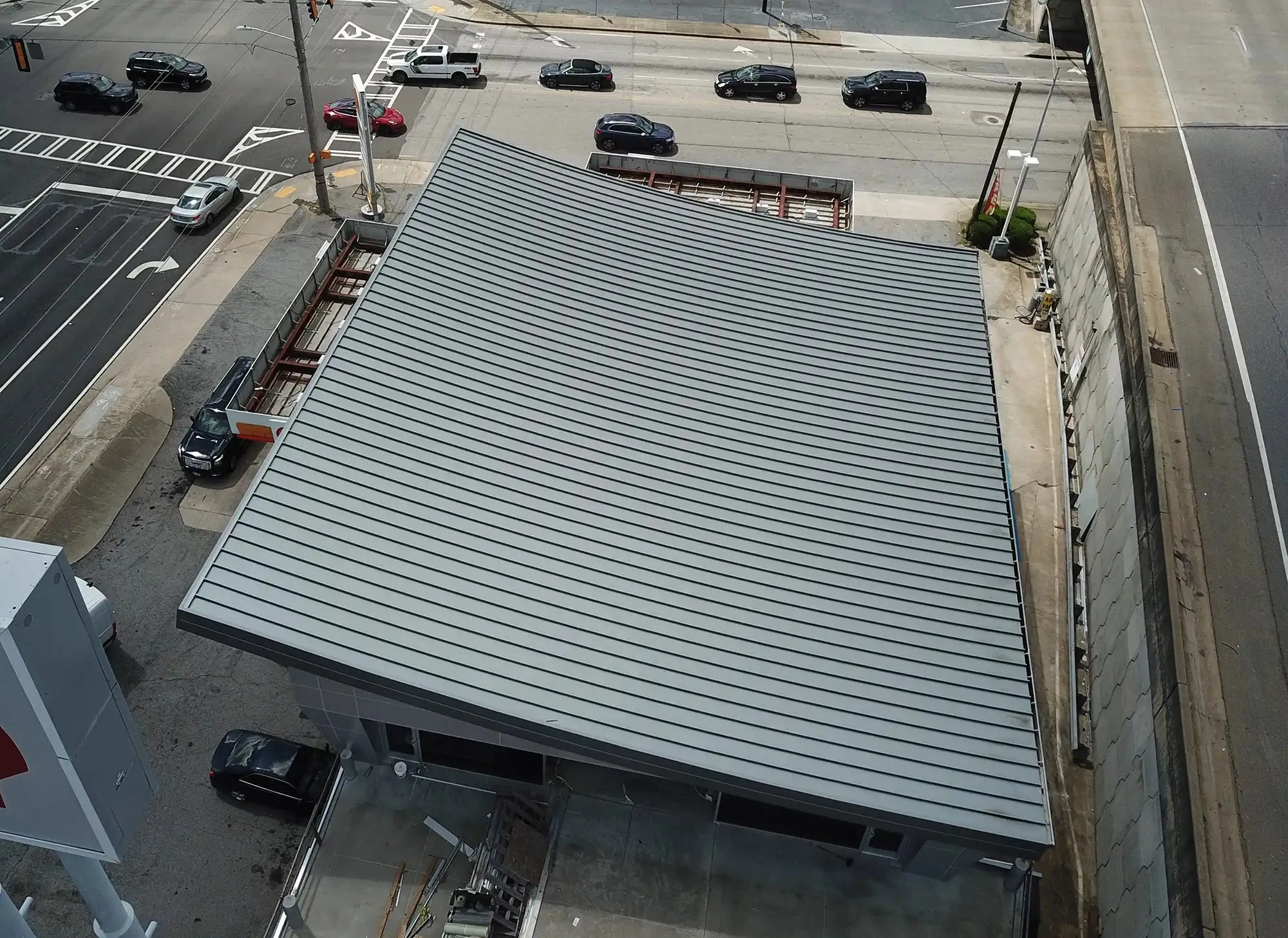
Standing seam metal roofing puts concealed fasteners under raised, interlocking seams, which gives the system two things that matter a great deal in Lincoln: strong resistance to wind uplift and a surface that sheds hail impact better than most low-slope alternatives without exposed fastener points for water to find later.
Concealed Fasteners and Wind Performance
Because the panels interlock at raised seams with fasteners hidden underneath, standing seam roofs don't rely on exposed screws that can back out or leak over time. That matters through the straight-line wind events that regularly accompany Nebraska's spring storm systems, where sustained gusts test every fastener and seam on a roof at once. The concealed-fastener design also allows the panels some room to expand and contract with temperature without stressing the fastening points directly, an advantage across the wide seasonal swing this climate delivers.
Wind loading calculations for a standing seam roof account for the building's height, exposure category, and roof geometry, not a single statewide standard. A single-story warehouse sitting alone near the edge of the city, with no adjacent buildings to break the wind, sees a different uplift load than a similar building tucked into a denser commercial park, and clip spacing gets specified accordingly.
Hail Resistance in Practice
Metal doesn't absorb hail impact the way a membrane can bruise or puncture; it dents. On most standing seam installations, cosmetic denting from hail doesn't compromise the roof's waterproofing, since the seams themselves, where water intrusion would actually occur, sit above the panel surface and away from the flattest impact zones. For owners concerned about resale or insurance appearance after a storm, panel gauge and paint system both affect how visible denting will be, and we discuss that trade-off before specifying a gauge.
Heavier gauge panels resist denting more effectively but cost more per square foot, and we walk owners through that spectrum rather than defaulting to the thinnest gauge that meets code. On a building where appearance matters to tenants or customers, a slightly heavier panel gauge is often worth the incremental cost over the roof's full service life.
Where Standing Seam Fits in Lincoln
- Manufacturing and industrial buildings with steep enough slope to shed water without a membrane
- Agricultural-adjacent commercial buildings on the edge of the city
- New construction where a fifty-year-plus service life justifies the higher upfront cost
- Buildings where architectural appearance matters alongside performance
- Additions or renovations matching an existing metal roof profile
It's less common on true low-slope commercial roofs, where a membrane system typically makes more practical and financial sense than adapting a metal panel system to near-flat pitch.
Coatings and Energy Performance
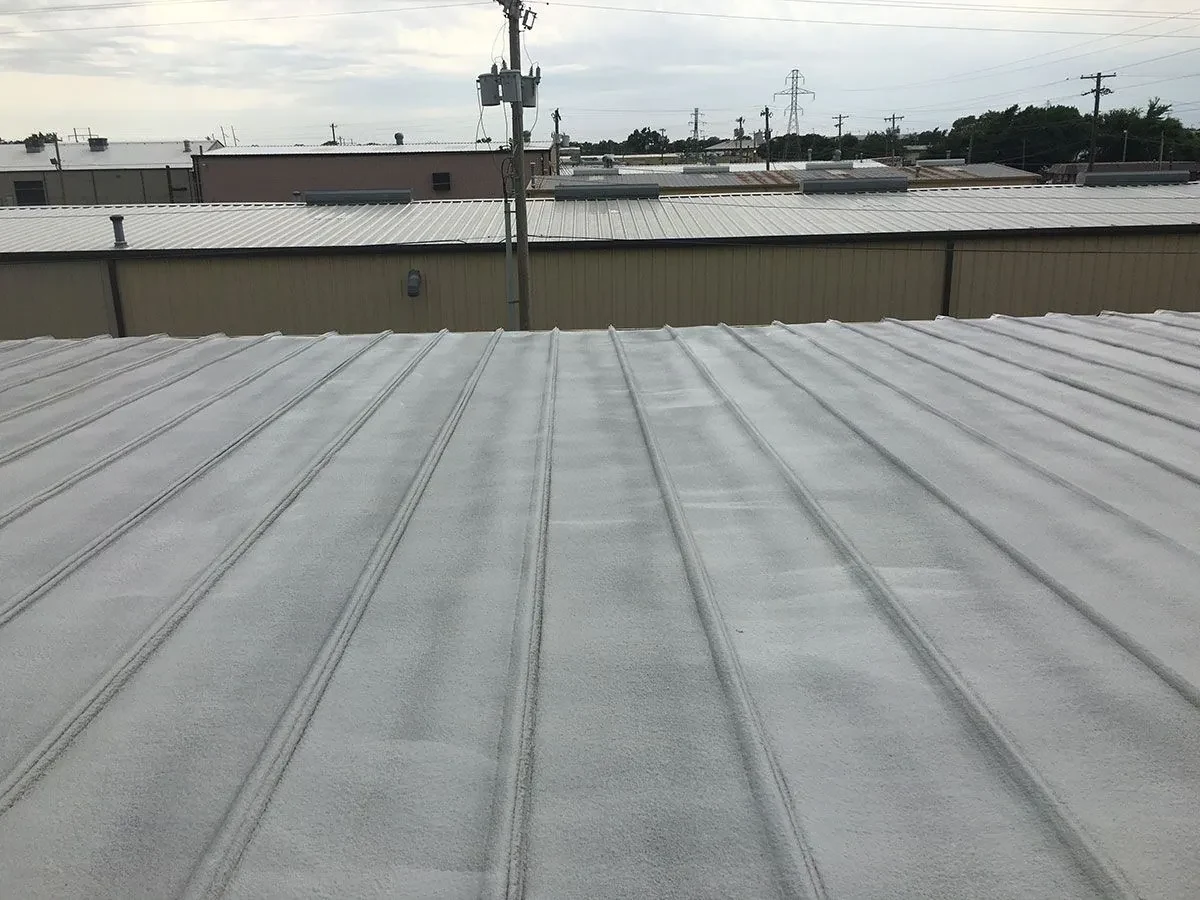
Standing seam panels are available with reflective, cool-roof-rated coatings that significantly cut surface heat gain compared to a standard painted finish. On a building where the metal roof sits over occupied or conditioned space, that coating choice affects rooftop unit load the same way membrane reflectivity does on a low-slope roof. We factor the building's insulation and HVAC setup into the coating recommendation rather than treating color as a purely aesthetic choice.
Installation and Panel Selection
Panel gauge, seam height, and clip spacing all get specified based on the building's roof slope, wind exposure, and snow load expectations, not a single standard package. A building on open ground at the edge of the city faces different wind loading than one sheltered by adjacent structures downtown, and we adjust the specification accordingly.
Fastening clips also vary by application, with fixed clips providing maximum wind resistance and floating clips allowing more thermal movement on longer panel runs. Longer roof spans on larger manufacturing buildings often call for a mix of both, fixed near structural anchor points and floating along the run, to balance movement allowance against uplift resistance.
Snow load is a secondary but real factor in panel and clip specification here. Nebraska winters can deliver heavy, wet snow followed by a hard freeze, and a roof designed only around summer hail exposure without accounting for that seasonal load can develop clip stress it wasn't engineered to handle.
Common Questions
Will hail dent a standing seam roof even if it doesn't leak?
Usually yes, to some degree. Cosmetic denting is common after significant hail, even when the roof's waterproofing performance is unaffected, and we're upfront about that distinction with owners concerned about appearance.
Can standing seam be installed over an existing roof?
Sometimes, over certain low-slope membrane roofs using a retrofit framing system, though this depends on the existing roof's condition and the building's structural capacity.
How does standing seam handle Nebraska's temperature swings?
The concealed clip system allows panels to expand and contract with temperature without transferring that stress directly to fasteners, which is one of the system's core advantages in this climate.
Is standing seam worth the extra cost over R-panel metal?
For buildings prioritizing wind uplift resistance, longevity, and appearance, often yes. For straightforward warehouse or agricultural buildings on a tighter budget, exposed-fastener R-panel remains a reasonable choice.
Does a standing seam roof need annual maintenance?
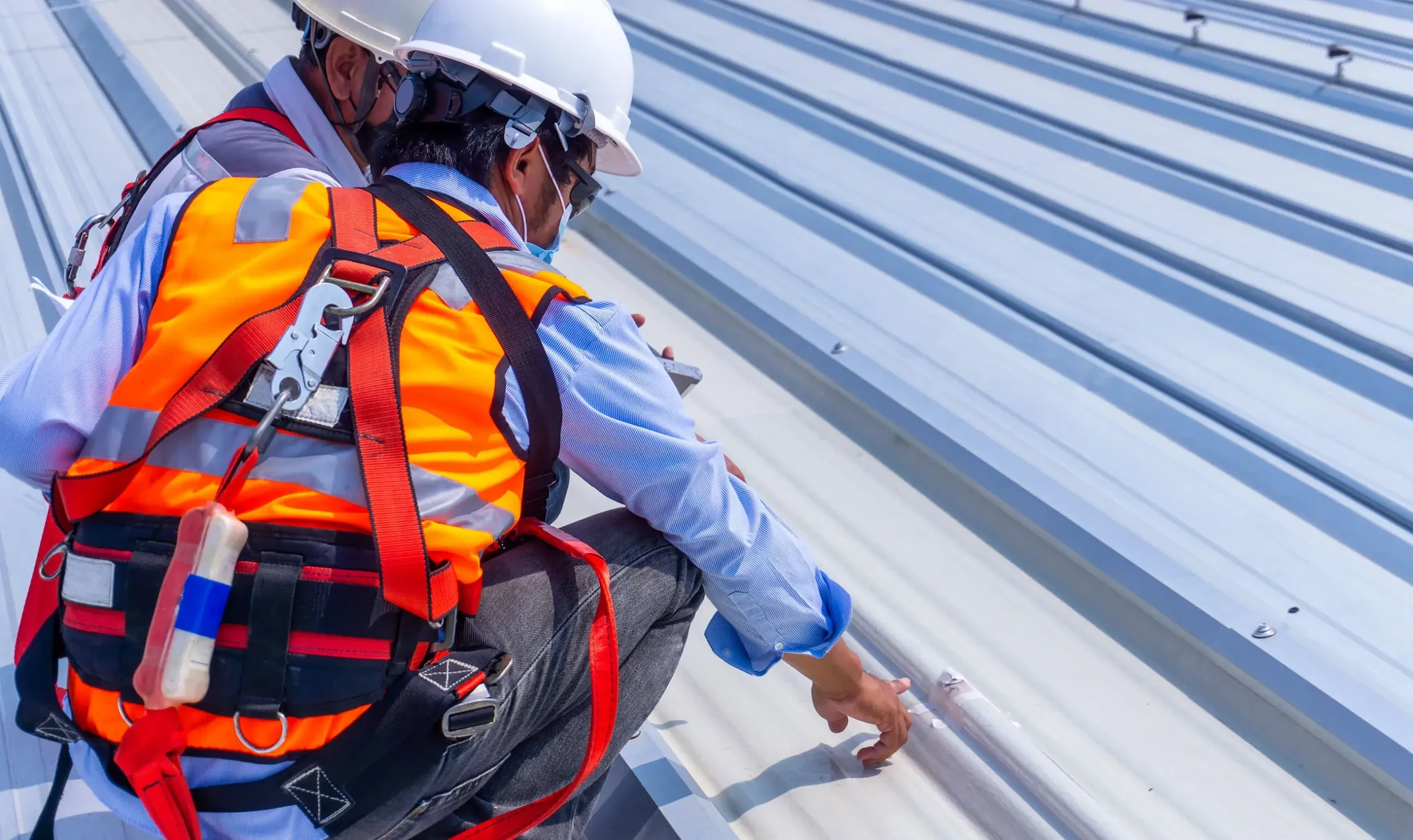
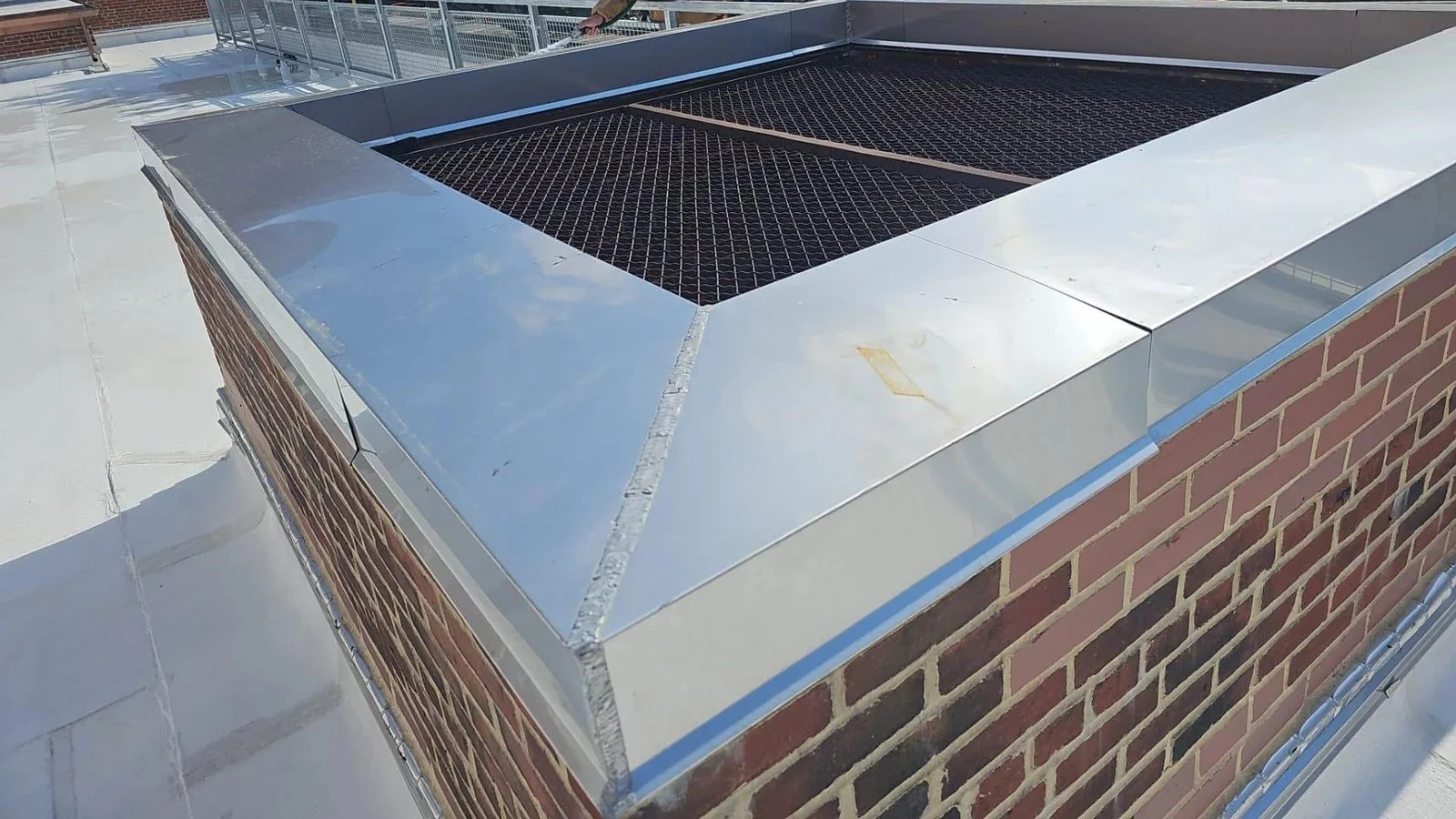
Less than most systems, but an annual check of sealant at penetrations, gutter and drainage condition, and any accessory flashing is worthwhile, since these secondary details fail well before the panels themselves do.
What's the realistic lifespan of a standing seam roof here?
Forty to sixty years is achievable with a quality installation and coating system, making it one of the longest-lived options we install.